
Prince Reza Pahlavi: biography, family and portraiture.
Prince Reza Pahlavi, born in Tehran on 31 October 1960, is the eldest son of Mohammad Reza Shah Pahlavi and Farah Pahlavi. He was Iran’s crown prince before the monarchy ended in 1979. Today, he is a public political figure living in exile, rather than a reigning monarch or an officeholder in Iran.
This guide explains who he is, how he relates to the earlier Pahlavi rulers, and how contemporary portraiture presents his image. Explore our Crown Prince Reza Pahlavi collection for the related artworks. These products are modern prints, and their inclusion does not imply his endorsement of the shop.
Who is Prince Reza Pahlavi?
Reza Pahlavi belongs to the third generation of the Pahlavi family: his grandfather was Reza Shah, and his father was Mohammad Reza Shah. He grew up as the heir to the Iranian monarchy. His official biography describes his childhood, education and later public life, including his designation as crown prince at the time of his father’s 1967 coronation.
The names “Prince Reza Pahlavi,” “Crown Prince Reza Pahlavi” and “Reza Pahlavi” generally identify this same person. The titles reflect his family background and former position as heir. They should not be confused with a claim that he currently governs Iran.
Three generations: Reza Shah, Mohammad Reza Shah and Prince Reza
Reza Shah founded the dynasty and ruled from 1925 to 1941. Mohammad Reza Shah succeeded him and ruled until 1979. Prince Reza Pahlavi, born in 1960, never reigned as shah. The distinction is especially useful when browsing a collection containing similar names and formal portraits.
For the earlier generations, read our Reza Shah biography and Mohammad Reza Shah biography. The Pahlavi Dynasty collection groups the related subjects without making them interchangeable.
Childhood, flight training and life in exile
In 1978, Reza Pahlavi travelled to the United States for advanced flight training. The revolution and the end of the monarchy prevented his return to the life for which he had been prepared. His official timeline records subsequent university study and a political-science degree from the University of Southern California.
The biographical profile on Farah Pahlavi’s website also describes his aviation training and education. These are family and personal institutional accounts, so they are most useful for attributed biographical details rather than as independent assessments of political influence.
Family and the connection to Farah Pahlavi
Farah Pahlavi is Prince Reza’s mother. He married Yasmine Etemad-Amini in 1986, and they have three daughters: Noor, Iman and Farah. The younger Farah Pahlavi should not be confused with her grandmother, the former empress. The family biography linked above records these relationships.
Our article about Farah Diba’s life and cultural legacy explores the former empress’s background and patronage. Reading the family’s biographies together helps distinguish a personal portrait from a broader account of royal institutions or Iranian history.
His public role today: reading sources carefully
Reza Pahlavi remains active in public discussion about Iran’s political future. His own website presents his stated goals in terms of democratic government and political choice. Those positions are his expressed programme; they are not evidence that all Iranians agree with him or that any particular future outcome is settled.
Independent reporting adds context to those self-descriptions. A January 2026 Euronews profile discusses his background and public role. Public statements and events change, so readers seeking current news should check the date and source rather than treating a portrait or an evergreen biography as a live political update.
Exploring Prince Reza Pahlavi portraits
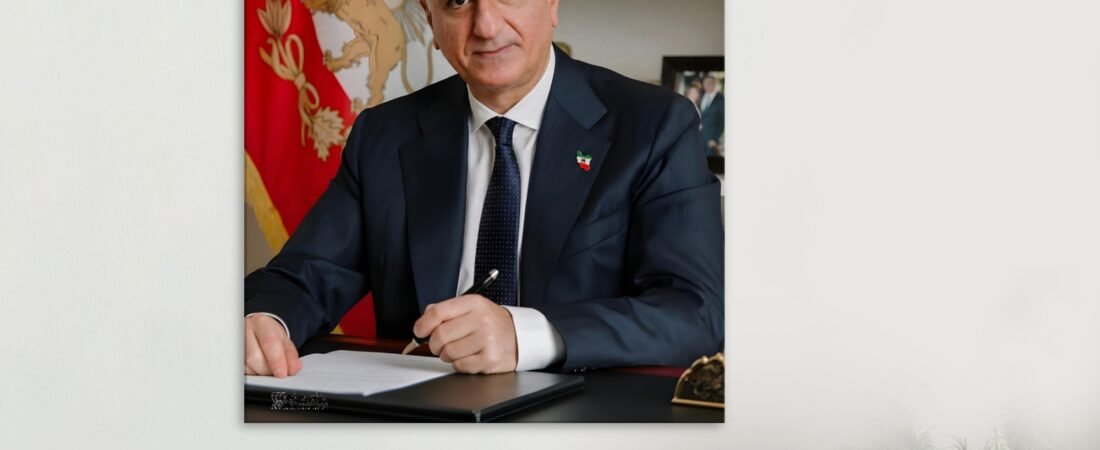
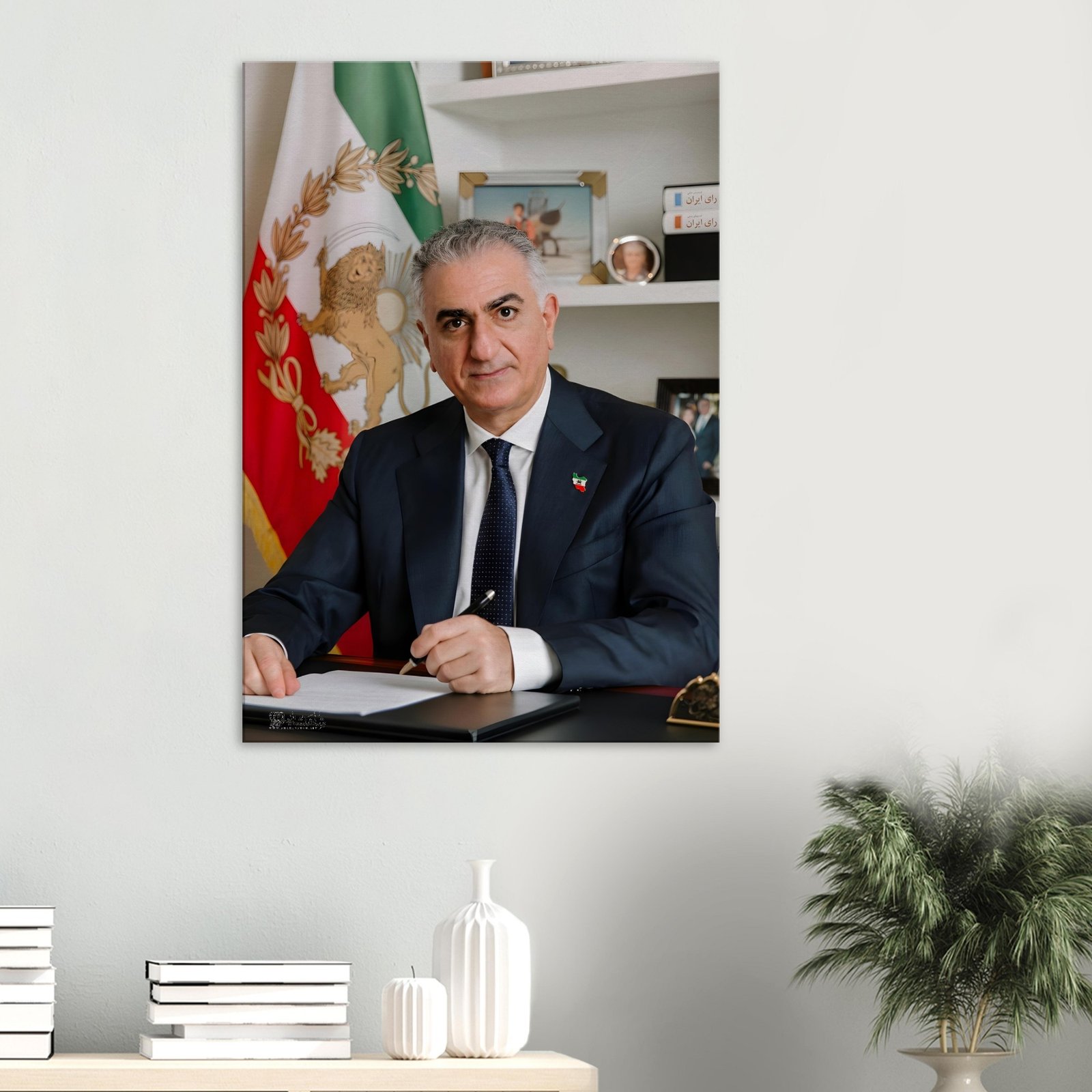
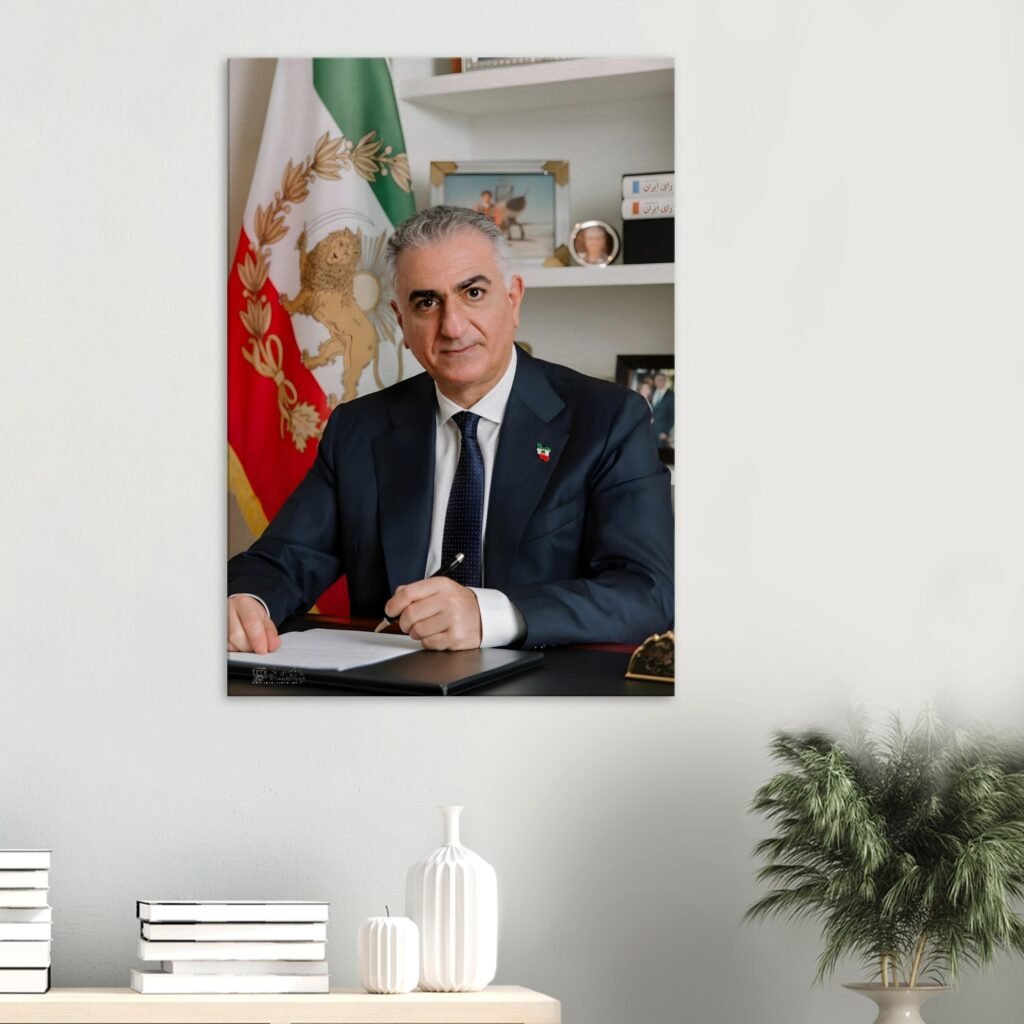
Contemporary portraits may use a formal suit, a restrained background or a close view of the face to create different impressions. A formal composition can feel composed and ceremonial; a fine-art interpretation may place greater emphasis on colour, texture or atmosphere. Neither approach should be mistaken for a complete account of the sitter’s life.
The two prints below provide a starting point for comparison. Inspect each product’s images, description and available dimensions. Words such as “official” in an existing product title describe how that listing is named; they do not establish that the artwork or retailer has been authorised by the person depicted.
-
Sale!
Prince Reza Pahlavi – Official Dignified Canvas Portrait
From Original price was: $139.52.$55.81Current price is: $55.81. BY SHAHANSHAH ARTChoose Size This product has multiple variants. The options may be chosen on the product page -
Sale!
Prince Reza Pahlavi – Fine Art Portrait Canvas
From Original price was: $139.51.$55.80Current price is: $55.80. BY SHAHANSHAH ARTChoose Size This product has multiple variants. The options may be chosen on the product page
View the Prince Reza Pahlavi collection →
Heritage settings and symbolic compositions
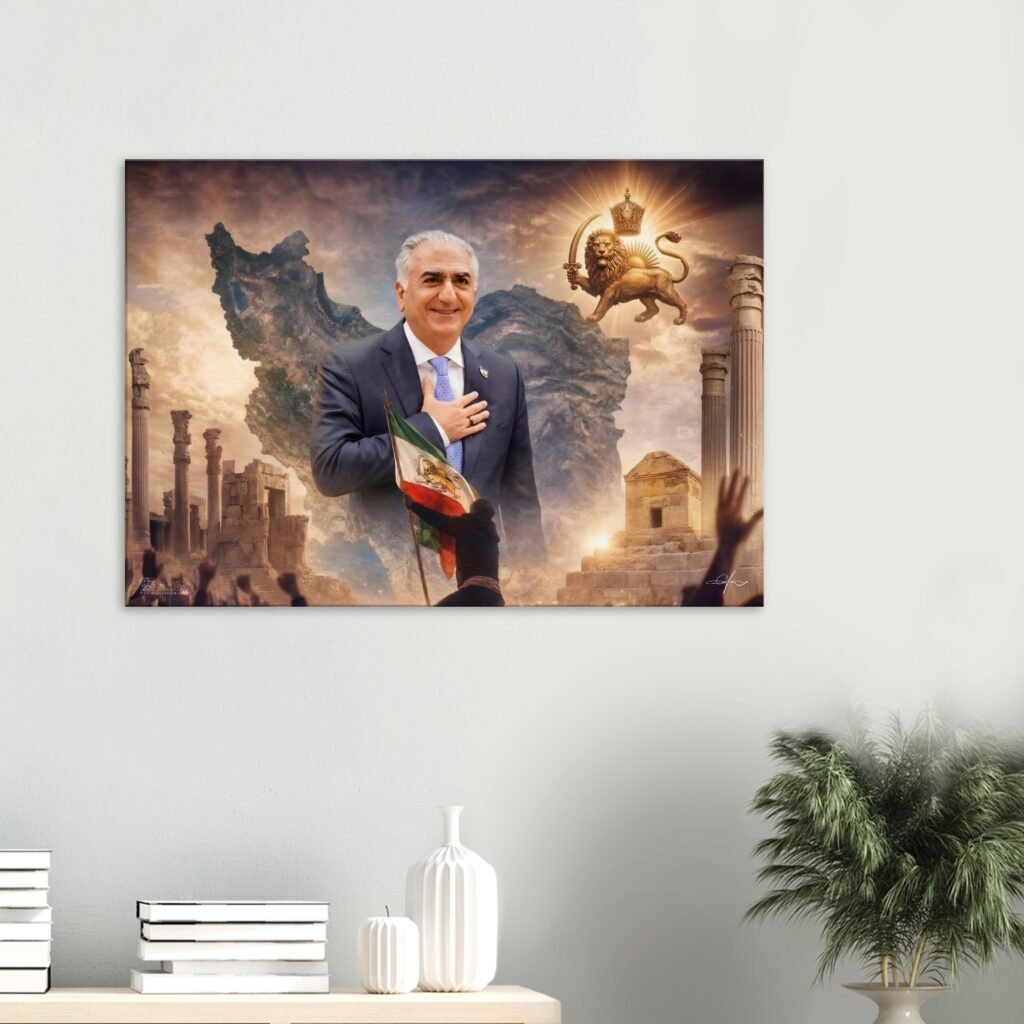
Other artworks place the prince in a heritage setting or pair his image with national symbols. Such arrangements can represent an artist’s idea of continuity, memory or identity. A composition referring to Pasargadae, for example, should not automatically be understood as a documentary photograph of the sitter visiting the site.
Compare the works below with the simpler portraits above. Notice the balance between person and background, the use of symbols and the overall colour palette. Explore Art Styles to compare photographic subjects, fine-art treatments and graphic interpretations.
-
Sale!
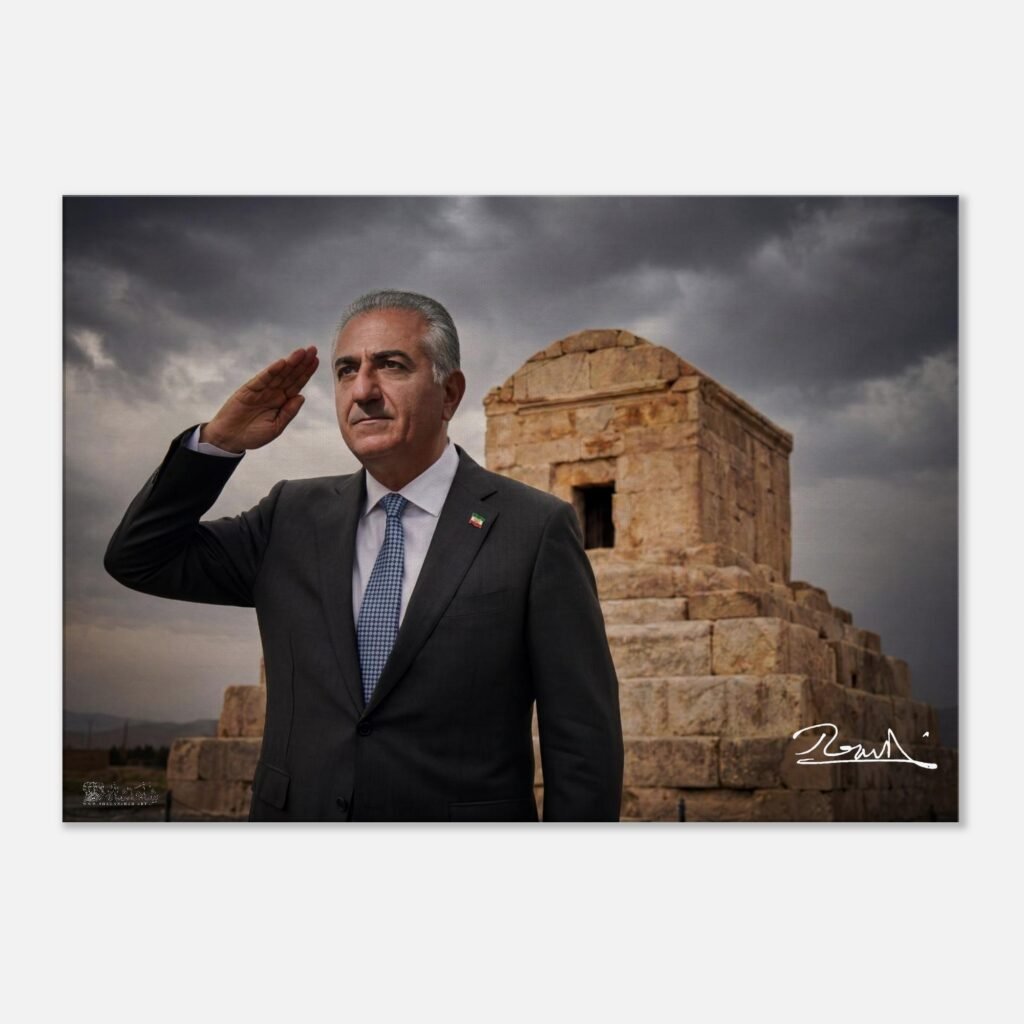
Crown Prince Reza Pahlavi Pasargadae Canvas Wall Art – Persian Historic Decor
From Original price was: $139.51.$55.80Current price is: $55.80. BY SHAHANSHAH ARTChoose Size This product has multiple variants. The options may be chosen on the product page -
Sale!
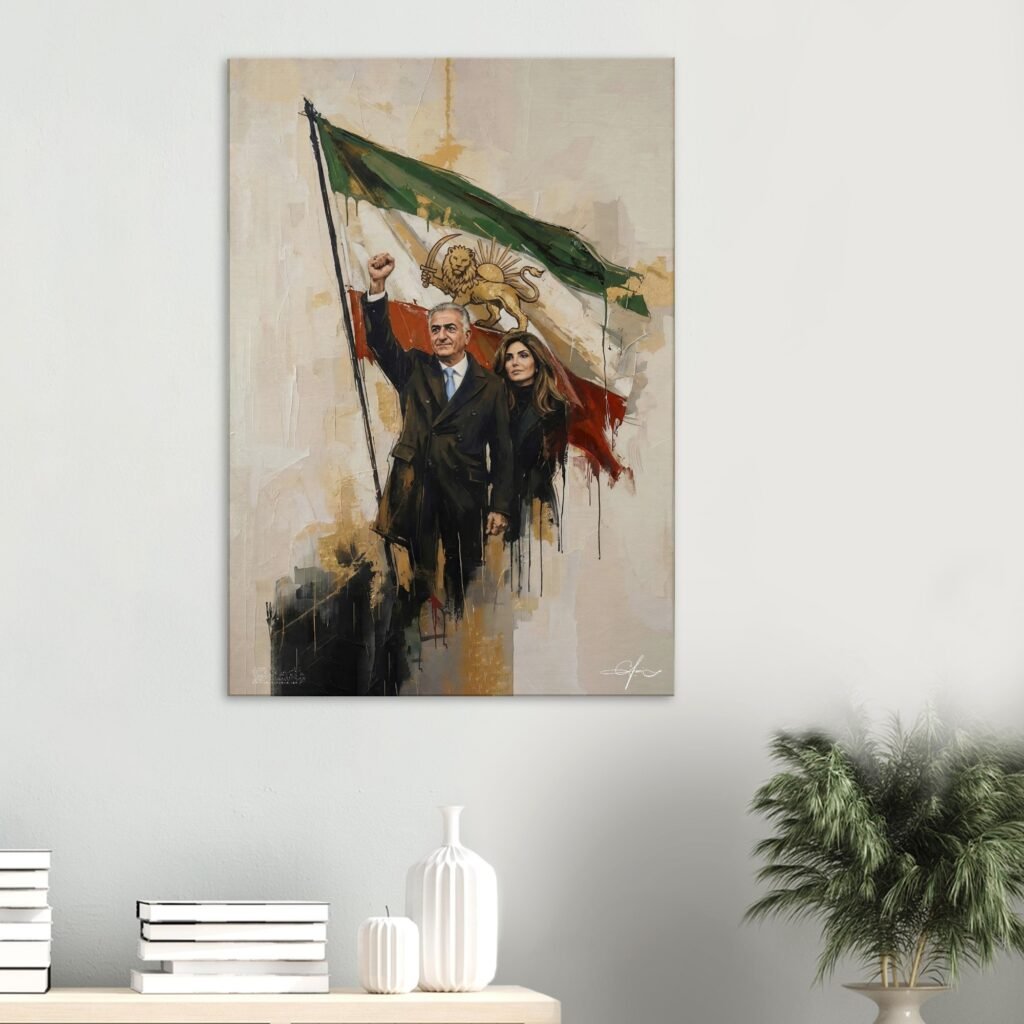
Prince Reza Pahlavi and Princess Yasmine – Elegant Artistic Canvas Portrait
From Original price was: $139.52.$55.81Current price is: $55.81. BY SHAHANSHAH ARTChoose Size This product has multiple variants. The options may be chosen on the product page
Choosing a portrait for your home
Start with the composition that best suits your space. A close portrait can serve as a focal point, while an image containing architecture or two figures may invite a wider view. Consider how its colours and contrast relate to furniture, books and neighbouring pictures. Let the image’s proportions guide the arrangement rather than selecting by subject name alone.
Next, measure the wall and check the artwork’s available dimensions. Our Size & Care Guide helps with planning. Product cards in this article display current shop information; open each product page for its latest prices, sizes and options. These are contemporary printed artworks, not original royal possessions.
Frequently asked questions about Prince Reza Pahlavi
Who are Prince Reza Pahlavi’s parents?
His parents are Mohammad Reza Shah Pahlavi and Farah Pahlavi. He is the grandson of Reza Shah, the founder of the Pahlavi dynasty.
When was Reza Pahlavi born?
He was born in Tehran on 31 October 1960, according to his official biography and the family profile.
Has Prince Reza Pahlavi ruled Iran?
No. He was the crown prince before the monarchy ended in 1979, but he never reigned as shah.
Are these prints endorsed by Prince Reza Pahlavi?
No endorsement or official affiliation is claimed. Shahanshah Art is an independent retailer offering contemporary portrait wall art.
Sources and editorial note
Prepared by Shahanshah Art using the linked official biography, Farah Pahlavi’s family profile and the dated Euronews article. Personal and family sources reflect their subjects’ perspectives; news profiles provide additional context. This article introduces biography and portraiture, rather than advocating a political programme. The product links are commercial and do not imply affiliation with, approval by or financial support for the Pahlavi family.
Continue exploring: Crown Prince Reza Pahlavi · Pahlavi Dynasty · All prints.