Mohammad Reza Shah: a life in history and portraiture.
Mohammad Reza Shah Pahlavi (1919–1980) was Iran’s last shah, reigning from 1941 to 1979. His years on the throne encompassed wartime occupation, the oil-nationalisation crisis, social and economic reforms, and the revolution that ended the monarchy. His portraits belong to that changing history, from formal military images to photographs of family and public life.
This guide introduces his life and contested legacy, then explores the visual language of the artworks in our Mohammad Reza Shah collection. The linked pieces are contemporary printed wall art, rather than original palace objects or claims of royal endorsement.
Who was Mohammad Reza Shah Pahlavi?
Mohammad Reza was born in Tehran in 1919 and was the son of Reza Shah, founder of the Pahlavi dynasty. He became shah in September 1941 after his father abdicated during the British and Soviet invasion of Iran. He was the dynasty’s second monarch and the last reigning shah of the country.
The Encyclopaedia Iranica account of twentieth-century Iran places his accession within the Second World War. That context matters: the younger shah inherited a throne under foreign occupation, rather than the same political circumstances in which his father had established the dynasty.
Mohammad Reza Shah and Reza Shah: two different reigns
Reza Shah ruled from 1925 to 1941. Mohammad Reza Shah succeeded him and ruled until 1979. Their similar names can cause confusion, especially when browsing military portraits. Checking the sitter’s name and the product description is more reliable than identifying a person from a uniform alone.
Read our Reza Shah biography and portrait guide for the earlier generation. The broader Pahlavi Dynasty collection brings together subjects from both reigns.
The oil crisis and the 1953 coup
One of the defining episodes of the reign was the conflict around Prime Minister Mohammad Mosaddegh and the nationalisation of Iran’s oil industry. In August 1953, a coup backed by the United States and Britain removed Mosaddegh. The shah, who had briefly left the country, returned, and his political position became stronger.
The U.S. Office of the Historian’s published documentary record includes an editorial note quoting President Eisenhower’s private acknowledgment of the American role. For historical interpretation and the Iranian political context, consult Iranica’s study of the 1953 coup. These records help distinguish documented foreign involvement from simplified stories about the period.
The White Revolution and social change
In 1963, Mohammad Reza Shah introduced a programme known as the White Revolution. Its measures included land reform, women’s voting rights, profit-sharing for industrial workers and a literacy corps. The programme sought to reshape the economy and society, but its effects differed across communities and were accompanied by political conflict.
The Iranica economic history of the Pahlavi period discusses these reforms and the wider changes in industry, agriculture and public investment. Oil revenues helped expand development, while rapid growth also created strains. A short biography should recognise the reforms without treating every outcome as a simple success or failure.
Coronation, Farah Pahlavi and royal imagery
Mohammad Reza Shah married Farah Diba in 1959. Their coronation took place on 26 October 1967, more than two decades after his accession. Farah was crowned Shahbanou at the same ceremony. The official coronation account provides a royal-family perspective on the event and its ceremonial presentation.
Coronation portraits use crowns, robes, medals and carefully arranged settings to communicate royal authority. These details differ from the quieter mood of a family photograph. To explore Farah’s background and cultural patronage, read our Farah Diba biography and cultural legacy article or visit the Farah Pahlavi collection.
Exploring formal Mohammad Reza Shah portraits
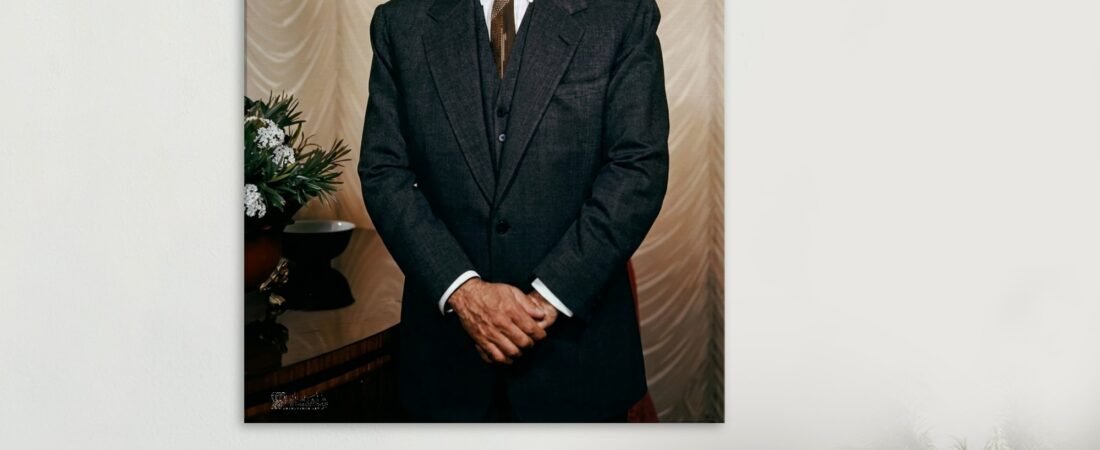
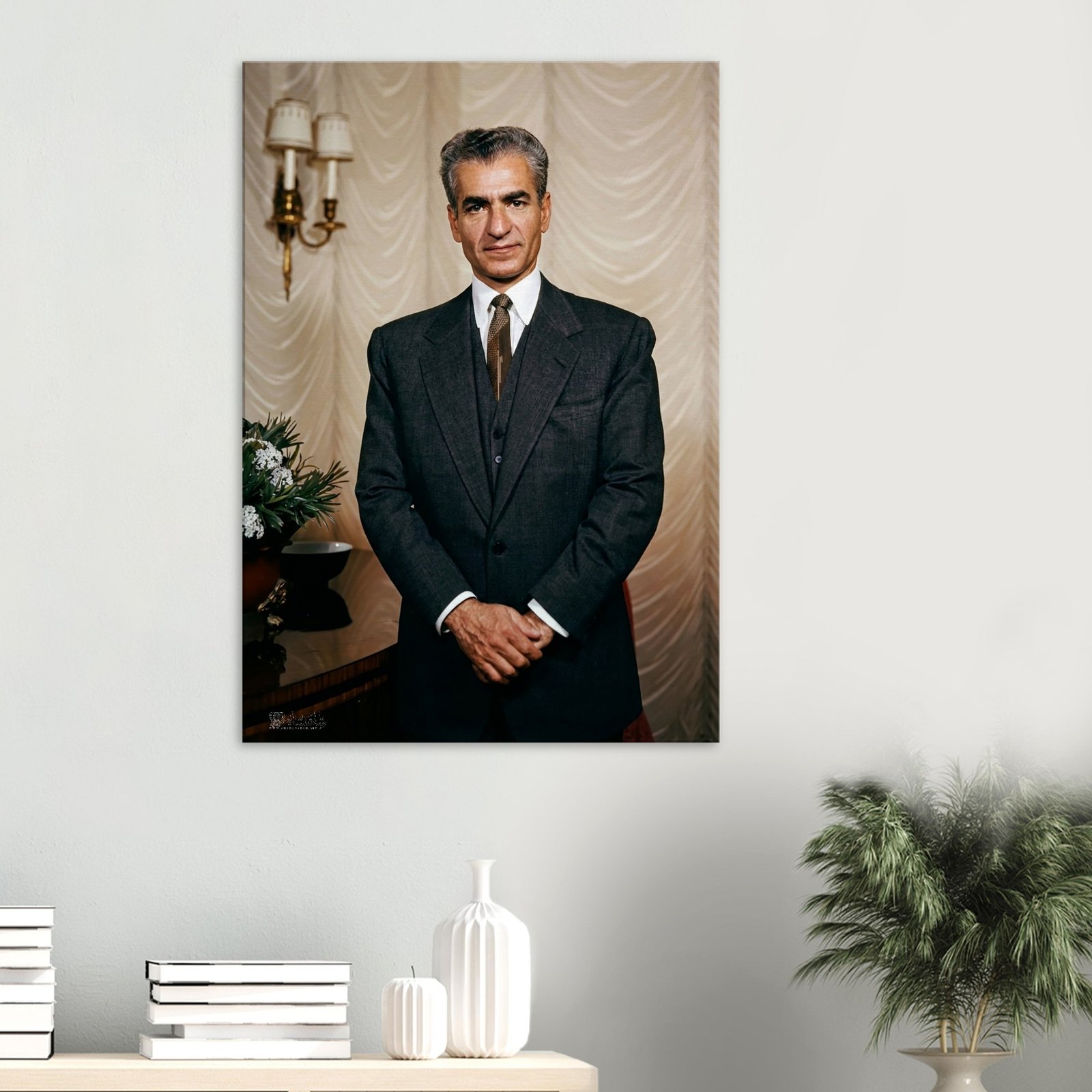
Formal portraits invite attention to posture, clothing, insignia and expression. A close composition can make the face the centre of the image, while a full-length view places more emphasis on dress and setting. These choices affect how a print feels in a room, independently of its historical subject.
The two artworks below offer different views of public presentation. Open each product to inspect its available images and dimensions. Product titles identify the artwork being sold; an unverified photographer, event or date should not be inferred from the image alone.
-
Sale!
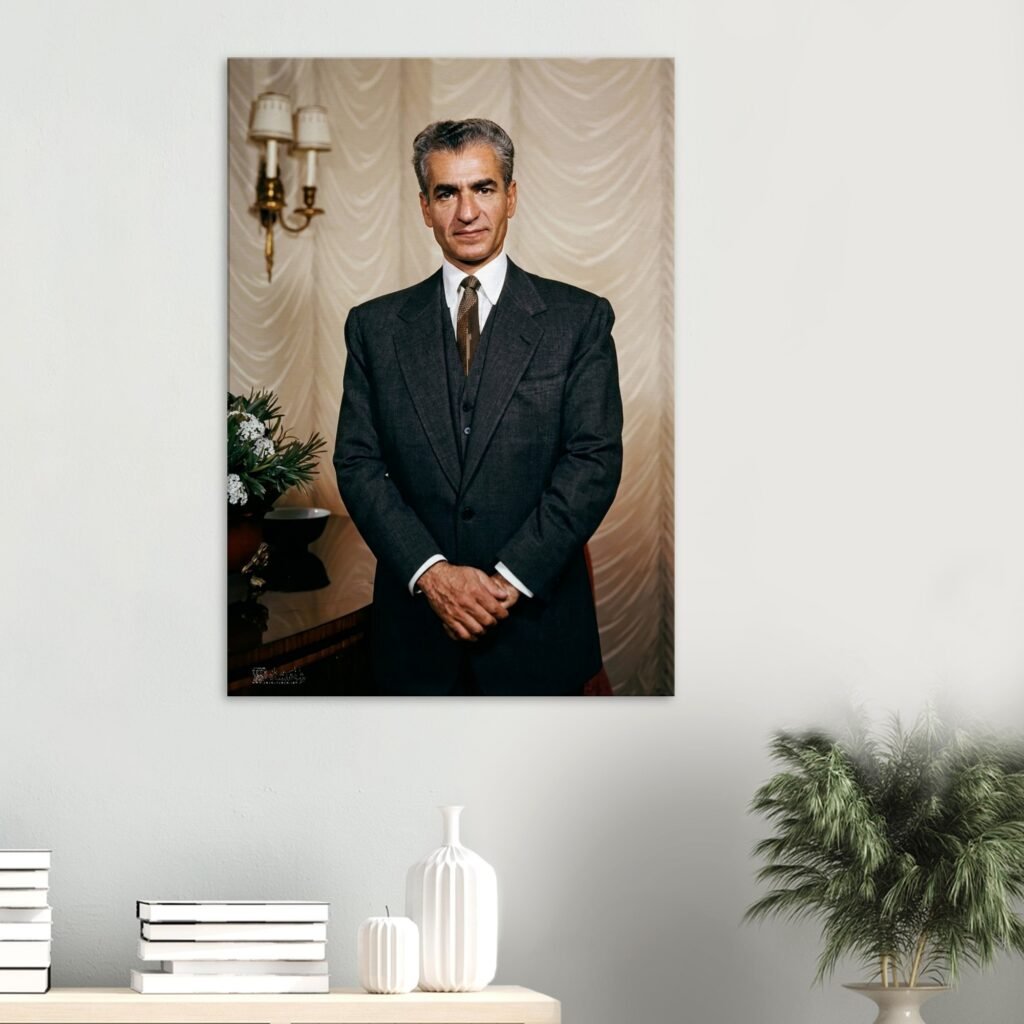
Mohammad Reza Shah Formal Portrait Canvas – Persian Royal Historic Wall Art
From Original price was: $139.51.$55.80Current price is: $55.80. BY SHAHANSHAH ARTChoose Size This product has multiple variants. The options may be chosen on the product page -
Sale!
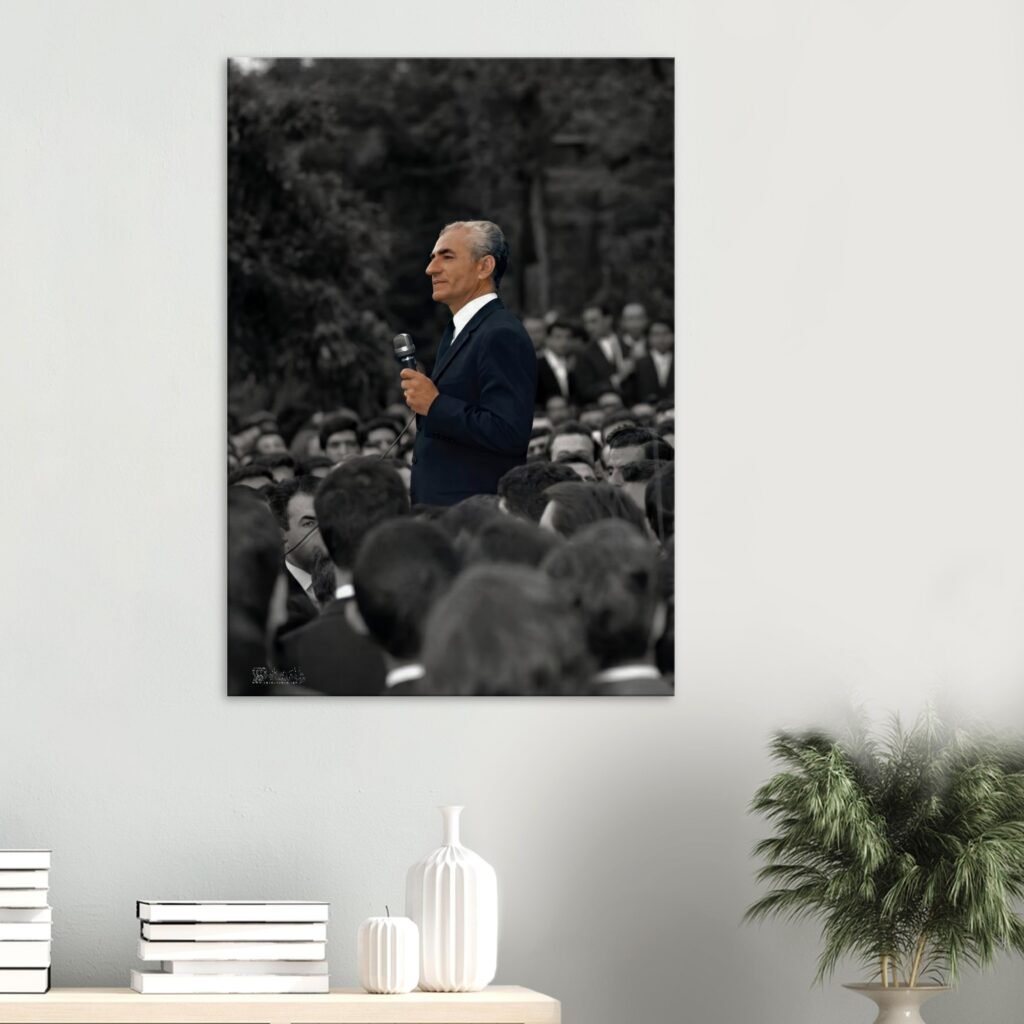
Mohammad Reza Shah Pahlavi Speech Canvas Print – Persian Royal Historic Wall Art
From Original price was: $139.51.$55.80Current price is: $55.80. BY SHAHANSHAH ARTChoose Size This product has multiple variants. The options may be chosen on the product page
Explore Mohammad Reza Shah wall art →
Family photographs and a more informal view
Images of the shah with Farah introduce another side of royal portraiture. A winter setting or a paired composition can feel less ceremonial than a uniformed portrait. Such photographs still present a selected moment; they do not, by themselves, explain private relationships or the wider political conditions in which they were taken.
Compare the mood, background and distance between the figures in the products below. Our Historical Photography collection includes related subjects, while Art Styles helps distinguish photographic prints from graphic and artistic interpretations.
-
Sale!
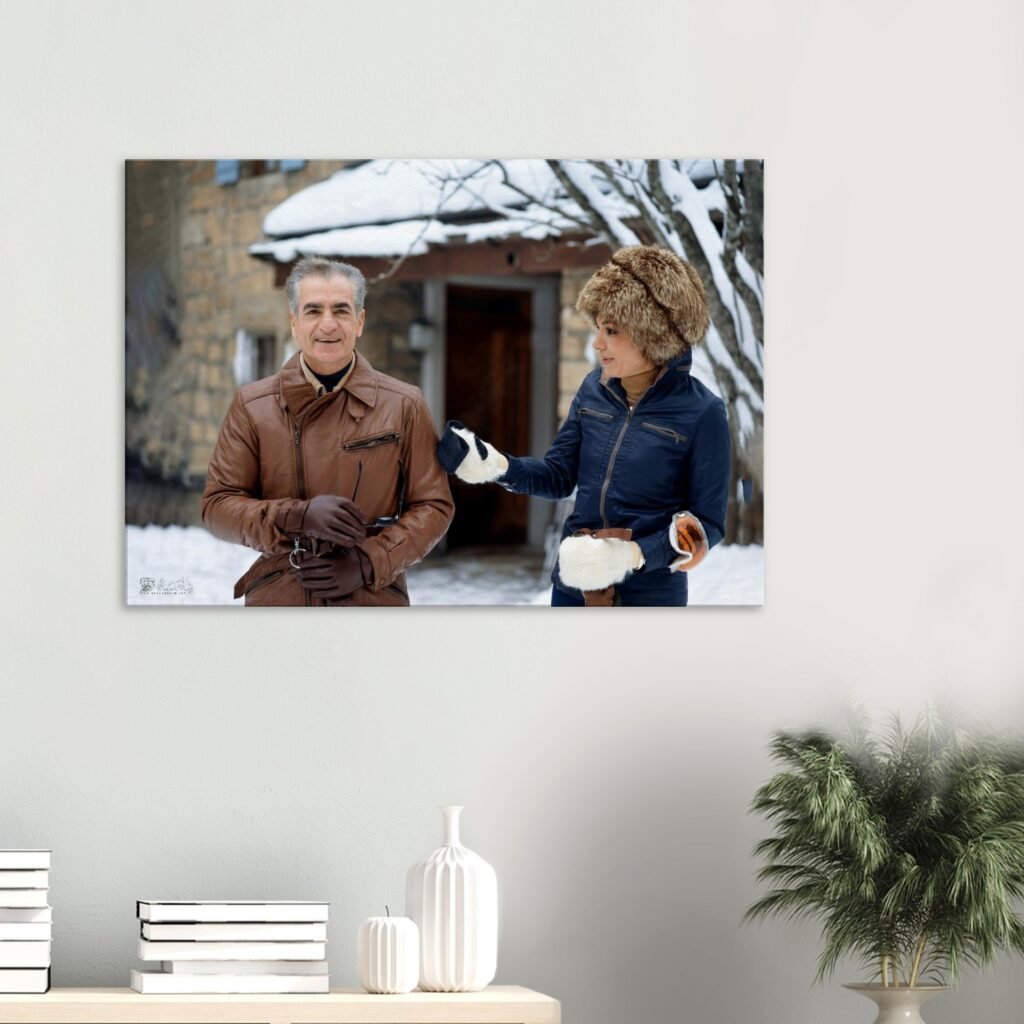
Historical Photography Canvas – Winter Vacations of Mohammad Reza Shah and Empress Farah
From Original price was: $139.51.$55.80Current price is: $55.80. BY SHAHANSHAH ARTChoose Size This product has multiple variants. The options may be chosen on the product page -
Sale!
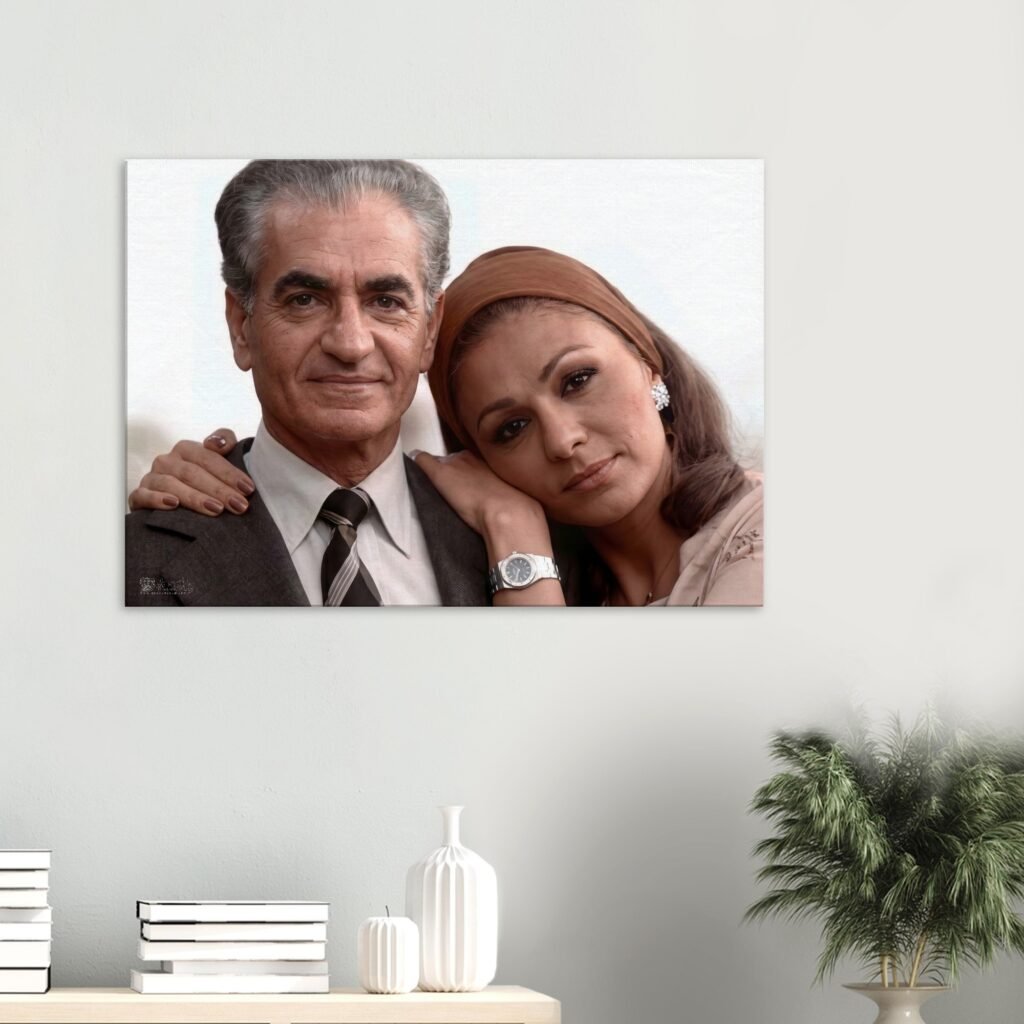
Mohammad Reza Shah Farah Pahlavi Romantic Portrait Canvas Wall Art – Persian Royal Decor
From Original price was: $139.51.$55.80Current price is: $55.80. BY SHAHANSHAH ARTChoose Size This product has multiple variants. The options may be chosen on the product page
Political power and a contested legacy
Economic development and social reform coexisted with authoritarian rule. Political opposition was restricted, and the security organisation SAVAK became associated with surveillance and repression. The creation of a single-party system in 1975 further narrowed formal political participation. These features are essential to understanding the monarchy’s legitimacy crisis.
The shah’s legacy is therefore debated in relation to both development and political freedom. Iranica’s history of Pahlavi administration examines the relationship between expanding state institutions and royal power. Displaying a historical portrait can begin a conversation about that record; it need not stand in for a complete judgment on the reign.
The 1979 revolution, exile and death
Mass opposition to the monarchy intensified in 1978. Mohammad Reza Shah left Iran on 16 January 1979, and the monarchy collapsed the following month. He lived in exile in several countries before dying in Cairo, Egypt, in July 1980. His departure and death are separate events: the end of his reign came before the end of his life.
For an overview of the later reign and its end, the Britannica biography of Mohammad Reza Shah Pahlavi is a useful starting point. Broader histories are needed to understand the diverse groups, decisions and social pressures involved in the revolution.
Choosing a portrait for your space
Begin by choosing the type of image you want to live with. A formal portrait can provide a strong focal point; an informal photograph may sit more naturally beside family pictures, books or other Persian-inspired artwork. Compare contrast, background colour and the direction of the sitter’s gaze before arranging neighbouring pieces.
Next, measure the wall and the furniture below it. Our Size & Care Guide offers planning advice. The product cards in this article use current shop information; check each linked product page for available dimensions, prices and options.
Frequently asked questions
When did Mohammad Reza Shah rule Iran?
He ruled from 1941 to 1979, succeeding his father Reza Shah during the Second World War.
Was he the same person as Reza Shah?
No. Reza Shah was his father and the founder of the Pahlavi dynasty. Mohammad Reza Shah was its second and last reigning monarch.
When was Mohammad Reza Shah crowned?
His coronation with Farah Pahlavi took place on 26 October 1967, many years after he became shah.
Are the linked artworks original royal possessions?
No. They are contemporary wall art prints. Photographic subjects and artistic interpretations are described in their individual product listings.
Sources and editorial note
Prepared by Shahanshah Art using the linked Encyclopaedia Iranica studies, U.S. Office of the Historian documentary record, official coronation account and Britannica biography. Institutional and royal-family sources reflect their respective perspectives. This article is an introduction to history and portraiture, not a complete political history. Shahanshah Art is an independent retailer; commercial product links do not imply Pahlavi-family affiliation or endorsement.
Continue exploring: Mohammad Reza Shah · Pahlavi Dynasty · All prints.